
Frequently asked questions.
This page answers the questions I'm most commonly asked about somatic movement, experiential anatomy, my workshops and courses, the Bodyscapes book and what I am doing to make this work accessible.
If you can't find what you're looking for here, please get in touch via the Contact Form — I read every message personally and am happy to help.
-
Item descriptionSomatics — derived from the Greek word soma, meaning the living body — is a broad term for practices that explore the body from the inside out, prioritising direct felt experience over external observation or instruction. The term was coined by educator Thomas Hanna in the 1970s to bring together a range of body-based methodologies under one name.
It is important to acknowledge, however, that body-based practices oriented towards self-knowledge, healing and embodied wisdom are not a Western invention. Dance, yoga, tai chi and many other body-based practices can be traced back to ancient indigenous peoples, birthed within ancestral cultures and offering connection to body, community and the living world. The formalisation of somatics as a Western field has been critiqued for extracting and repackaging knowledge from non-white body-mind traditions without adequate acknowledgement of those origins.
In my own work, I try to hold this history honestly. The embodied anatomy I teach draws primarily on Western scientific and phenomenological traditions — the work of practitioners like Bonnie Bainbridge Cohen, the somatic movement lineage, and experiential anatomy as developed in Western educational contexts. At the same time, I weave in myth, meaning-making and a deep respect for the body as a living landscape that carries far more than anatomy — it carries story, ancestry and culture.
I am one practitioner working from a particular location within a complex and evolving field. I offer this work with humility, ongoing curiosity, and a commitment to acknowledging the breadth and depth of the traditions that have shaped our collective understanding of the body.
-
Somatic movement education is a body-centred approach to learning that prioritises internal sensation, self-awareness and embodied experience over external instruction or performance. Rather than telling the body what to do, somatic education invites you to listen to what your body already knows. It draws on fields including experiential anatomy, developmental movement, neuroscience and movement arts to support a deeper, more nuanced relationship with your own body.
-
Embodied anatomy — sometimes called experiential anatomy — is the practice of exploring your body's structures and systems from the inside out. Rather than studying anatomy from diagrams or textbooks, you use movement, imagery, touch and somatic enquiry to sense and explore your bones, organs, fluids and fascial system directly. It's anatomy as lived experience rather than academic subject.
-
Yoga is rooted in Samkhya philosophy — an embodied philosophical tradition whose deeper purpose is the understanding of the nature of the self. Asana, breath and awareness practices are pathways within that larger philosophical framework.
Somatic movement education has a different orientation. While my work weaves in philosophical and mythological threads — and embodied anatomy can certainly open into questions of meaning and self-understanding — it is not a philosophy in the same sense. Its primary focus is the direct, experiential exploration of the body's structures, systems and movement patterns from the inside out.
The two practices are deeply complementary. Many yoga teachers find that somatic study enriches their teaching considerably, bringing greater anatomical nuance, systemic awareness and embodied depth to a practice that is already philosophically rich. Rather than replacing yoga's philosophical framework, somatic movement education offers a different lens — one rooted in lived anatomical experience rather than philosophical tradition.
-
Authentic Movement is a contemplative movement practice developed by Mary Starks Whitehouse in which a mover follows inner impulses to move — or be still — while a witness holds attentive, non-judgmental presence. It supports deepened body awareness, self-knowledge and creative expression, and has roots in Jungian psychology, dance therapy and somatic practice.
About Somatic Movement
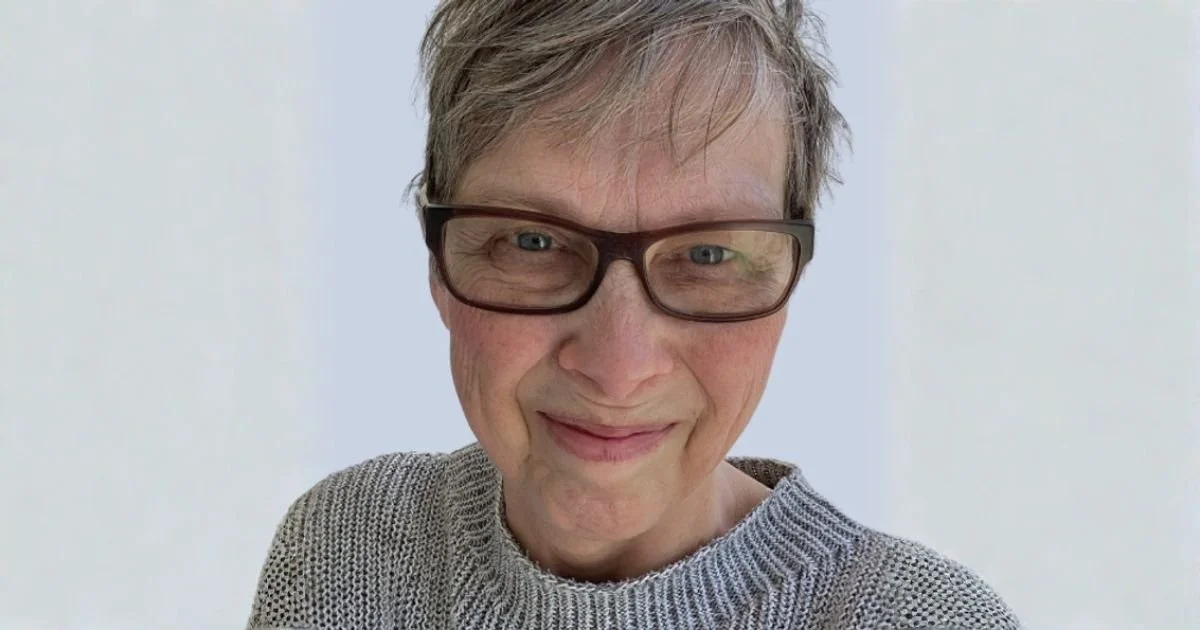
About Beverley
-
I have been exploring the conversation between body, mind and self for more than 35 years — first through the practice of yoga, then deepening into experiential anatomy, developmental movement and Authentic Movement. I am the founder of Barefoot Body Training and the author of Bodyscapes, forthcoming from North Atlantic Books in Autumn 2026. I work with yoga teachers, somatic coaches, therapists and movement professionals internationally.
-
My workshops and courses are designed for yoga teachers, somatic movement educators, somatic coaches, body-based therapists, and curious movement practitioners who want to deepen their understanding of embodied anatomy. Some participants come with decades of professional experience; others are newer to somatic work. What matters most is genuine curiosity and a willingness to slow down and pay attention.
-
I am based in the UK and work internationally. My Body Labs and Embodied Anatomy Series are delivered entirely online, making them accessible to participants worldwide. My Immersions are offered in hybrid format — both in-person and online — so international participants can join remotely. I also take my workshops and immersion on the road around the UK, Europe and beyond.
Workshops & Body Labs
-
A Body Lab is a 90-minute online taster workshop exploring a single body theme in depth — from the bones and fascia of the feet to the hidden spaces of the ventricles. Body Labs are designed as accessible entry points into somatic movement and embodied anatomy. No prior experience is necessary and they are suitable for anyone curious about this work.
-
A Body Lab is the ideal starting point if you are new to somatic movement or want to explore a specific body theme before committing to longer study. The Embodied Anatomy Series is for practitioners ready to go deeper into a progressive, structured course of study. Immersions are for committed practitioners seeking sustained, immersive transformation over three days.
If you are unsure which is right for you, please get in touch via the Contact Form and I am happy to help.
-
No — Body Labs are designed to be welcoming and accessible to anyone with a genuine curiosity about their body. No prior somatic or movement experience is necessary.
-
The Embodied Anatomy Series is designed for movement teachers and practitioners who already have some experience of yoga, somatic practice, dance, or body-based therapy. You don't need to have studied embodied anatomy specifically, but some familiarity with movement practice is helpful.
-
No — the three workshops in the Fluid Body Series (Relational Blood, Contemplative CSF and Purposeful Lymph) are designed to be taken in sequence. The progression is crafted this way to support integration.
-
Online workshops are delivered via video conferencing. You will receive full joining instructions including the platform details when you book. All you need is a reliable internet connection, a device with a camera and microphone, and enough space to move safely and comfortably.
-
Wear comfortable clothing that allows you to move freely. You may want a yoga mat, a blanket or cushion for comfort, and a journal for reflective writing. Full guidance will be sent with your joining instructions.
Immersions
-
A somatic immersion is a three-day in-depth exploration of a specific body system or theme. Immersions combine movement enquiry, experiential anatomy, creative practice and somatic reflection to create a sustained, transformative experience. They are designed for committed practitioners ready to go deeply into embodied work over an extended period.
-
Yes — immersions are offered in hybrid format, meaning you can attend either in-person or online. Both formats receive the same content and facilitation. In-person participants benefit from shared physical space; online participants can join from anywhere in the world.
-
Current immersions include Nourish (digestive system and vagus nerve), Ground (bones and connective tissue), Breathe (breath and embodied ecology), Feel (heart system and blood flows), Everywhere (fascia and whole-bodiedness) and Origins (embryology and early movement). Visit the Immersions page for full details and upcoming dates.
Bodyscapes
-
Bodyscapes is Beverley Nolan's forthcoming book, publishing with North Atlantic Books in Autumn 2026. It is an experiential journey through ten body terrains — from the cellular boundaries that define you to the fascial web that connects everything all at once. Through guided movement explorations, creative practices, deep somatic enquiries and myth and meaning-making, it invites readers into the living landscapes and ecosystems of their own body. It is written for somatic practitioners, movement teachers, body-based therapists and anyone seeking a deeper embodied relationship with their anatomy.
-
Every reader of Bodyscapes will receive access to an exclusive online Companion Library — a chapter-by-chapter collection of video movement practices, audio somatic explorations, curated Spotify playlists and Pinterest boards.
The library is designed to bring each body terrain to life in your own body, at your own pace. It is an integral part of the Bodyscapes experience, not a supplementary extra, and it also aims to inspire you to create your own resources.
The library opens when the book publishes in Autumn 2026.
-
Bodyscapes will be published by North Atlantic Books in Autumn 2026. Pre-order information will be shared with everyone on the Bodyscapes Waitlist as soon as it is available.
You can join the waitlist on the Bodyscapes page.
Staying Connected
-
You can sign up to my mailing list on the Home page, Work With Me page, or Contact page.
Select the options relevant to you — workshop updates, Bodyscapes news, or general updates from my practice.
-
Yes — I send a monthly newsletter with upcoming workshop announcements, early bird reminders, and a short somatic or reflective prompt. You can sign up on the Home page or Contact page.
-
Yes — I write Field Notes from the Body on Substack, exploring themes of somatic practice, embodiment and the living landscape of the body. You can find it via the Writing page.
-
Honestly — because it doesn't feel like an embodied practice.
Social media is designed to capture and hold attention rather than deepen it. The algorithmic hunger for constant content, the noise, the performance of presence — none of this sits well with work that is fundamentally about slowing down, paying attention and going inward. I don't want to be clamouring for your attention in a crowded feed. I'd rather earn it through work that is genuinely worth your time.
The best way to stay connected with me is through my newsletter — where I share workshop news, reflections from my practice and a regular somatic or journaling prompt — and through Field Notes from the Body on Substack, where I write more reflectively about embodiment, somatic practice and the living landscape of the body. I occasionally post Notes on the Substack app too for more spontaneous sharing.
If you value depth over noise, I think you'll find both worth your inbox.
Here is the newsletter sign up.
And, here is a link to my Substack. A monthly essay is sent our free to all subscribers, with follow up resources for paying subscribers
Pricing & Accessibility
-
Yes — an evergreen 10% discount is available for NHS workers and anyone receiving income support.
Early bird pricing is also available: book an immersion eight or more weeks ahead and pay £395; book an online series four or more weeks ahead and pay £195.
-
A small number of supported places are available at a meaningfully reduced rate for each offering, for those facing genuine financial difficulty. A payment plan can also be arranged alongside a supported place if needed.
Please use the Contact Form to request the simple application form.
-
I have found that underpricing doesn't create true accessibility for those who genuinely need it and makes the work unsustainable over time.
Fair, transparent pricing allows me to keep offering workshops year after year, invest in quality venues and resources, and bring full energy and presence to supporting my students well.
A tiered structure means there is genuinely something accessible at nearly any budget, while ensuring the work remains viable for the long term.
Still have a question? If your question isn't answered here, please get in touch via the Contact Form. I read every message personally and am happy to help you find the right path into this work.